Understanding ADHD: It’s Not Just About Attention or Focus.

If you think ADHD is just about focus, you're seriously missing the bigger picture.
ADHD is not simply an issue of attention—it’s a difference in executive functioning.
Executive functions are the brain’s self-management system. They help us plan, start tasks, stay organized, remember information, and regulate emotions. When these systems are challenged, everyday tasks can feel harder than they “should.”
This isn’t about laziness or lack of effort.It’s about how the brain works.
Let’s break down a few key executive functions and what they look like in real life.
🧠 Working Memory
Working memory is like your brain’s “post-it note.” It helps you hold information while taking in new information.

What this looks like in daily life:
Walking into a room and forgetting what you went in for
Picking up your phone and thinking, “What was I going to do?”
Trouble listening while also thinking about what to say next
Needing to reread things multiple times
Needing to reset your password constantly
Misplacing your glasses...again
Getting most of it right, but always forgetting something
When working memory is challenged:
Information doesn’t “stick”
You lose track of what you’re doing
You forget steps in the middle of a task
Its difficult to do mental math
Helpful supports:
Write things down right away
Use visual reminders (notes, whiteboards)
Repeat information out loud...literally say it out loud
Break tasks into smaller steps- very small steps
Rely on consistent routines, not memory
Remember that neurotypical people make lists- holding information in your head is not a strength
Working memory struggles aren’t a character flaw—your brain just isn’t meant to hold everything internally. It's because your brain is so complex and able to recognize patterns that other people can't, that makes it unable to hold information that should just be written down. Let your brain do what it was meant to do! Free up space.
🧠 Task Initiation
Task initiation is the ability to start a task without unnecessary delay.
It’s not about knowing what to do—it’s about knowing where to begin.

What this can look like:
Knowing what you need to do but not starting
Procrastinating, even on important things
Waiting until the last minute
Feeling stuck or frozen
Real-life examples:
Staring at something and not beginning
Avoiding emails or phone calls
Waiting for “motivation” to kick in
Thinking about doing something… but not doing it
Needing to organize the entire room before you can clean the countertop
Feeling like everything is equally as important, and spending more time thinking about where to start than actually starting
Spending more time making the list and the schedule, and feeling adverse to actually doing one of the tasks
Helpful supports:
Start with the smallest possible step- remember, the step you are thinking is the smallest, probably isn't
Use a visual analog timer
Lower expectations (done > perfect)
Create a clear first step and put that in your calendar- ie) allocate a time and enter "save tax files to a folder" rather than do taxes
Use accountability or body doubling
Task initiation isn’t about laziness.It’s about knowing how your brain needs to start tasks.
🧠 Planning
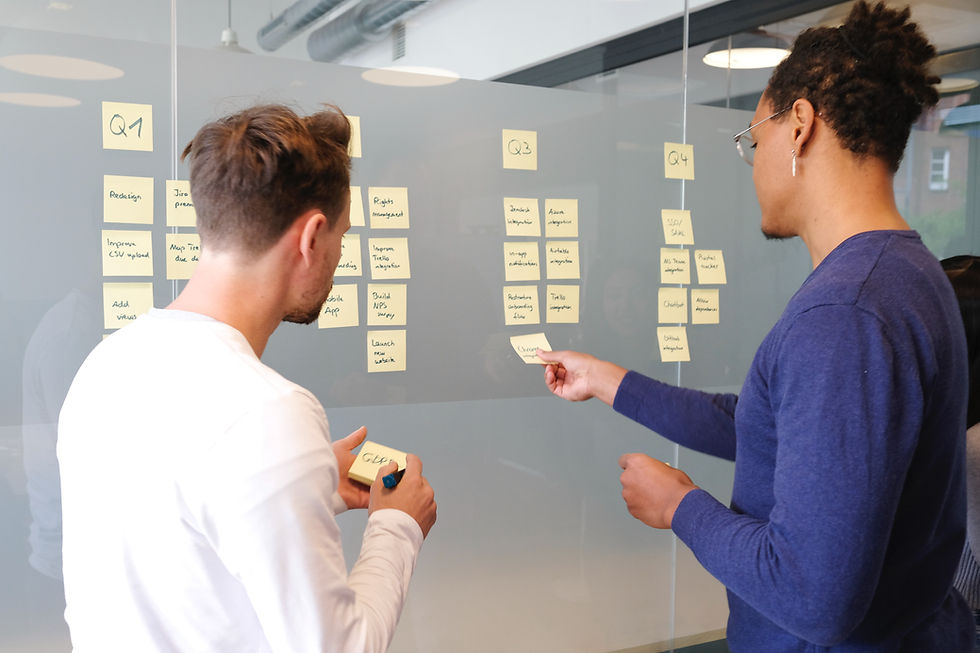
Planning is the ability to map out how to get from start to finish.
It’s not just about being organized—it’s about knowing:
what is the priority
where to start
what steps to take
how long things will take
What this can look like:
Not knowing where to start
Feeling overwhelmed by multi-step tasks
Skipping steps without realizing
Underestimating how long things take- time blindness
Real-life examples:
Thinking something will take 20 minutes… and it takes 2 hours
Realizing you needed something after you already started
Doing things in the least efficient order
Everything feeling equally important
Helpful supports:
Break tasks into smaller steps
Estimate time for each step (not the whole task)- literally get a timer and compare your estimate vs actual time
Double your time estimate and add a buffer- allotting an hour for somehting that only takes 20 minutes gives you BONUS free time. Doing the opposite gives you stress
Use checklists or visual plans
Focus on one step at a time
Planning isn’t about “just figuring it out.”It’s a skill—and it can be supported.
🧠 Organization
Organization is the ability to keep track of things and information.
It’s not about being messy—it’s about how your brain creates and maintains systems over time.

What this can look like:
Losing things you just had
Clutter building up quickly
Having “piles” instead of systems
Starting to organize… but not maintaining it
Real-life examples:
Putting something in a “safe place” and never finding it again
Buying organizers and not using them
Re-cleaning the same space over and over
“Out of sight, out of mind”
Helpful supports:
Give everything a “home”
Keep items where you use them
Use open, visible systems (not hidden ones)
Reduce the number of steps
Reset spaces in small chunks
Organization isn’t about perfection.It’s about creating systems your brain can actually maintain.
🧠 Final Thoughts
If any of this felt familiar, you’re not alone.
ADHD is not about “not trying hard enough.”It’s about how the brain manages executive functions.
And the goal isn’t to try harder—it’s to use supports that actually work.
When you understand executive functioning, things start to make more sense.
And from there, you can begin to build strategies that support your brain—instead of fighting against it.
If you’re looking for support with executive functioning or ADHD, working with a therapist or coach can help you build and maintain systems that work for your unique and wonderful brain.
Comments